Will a Glass Touch Switch Fit My UAE Back Box?
Most UAE homes have UK-style square back boxes, while many glass touch switches are designed around European boxes. Here is how to check the fit before you order.
By the SmartHomes.ae team · Updated 17 October 2026
Short answer: not automatically. Most UAE walls use square BS 4662 back boxes (86 x 86 mm plates, screws at 60.3 mm centres). Many European glass switches are built for 60 mm round boxes or Italian modular boxes.
What to do: measure your box, screw spacing and depth. Then compare those numbers with the spec sheet of the exact series you want. Any change to fixed wiring or back boxes must be done by a qualified electrician.
A glass touch switch fits your UAE back box only if three things match: the plate covers the box, the fixing screws line up, and the module fits inside the box with room for the cables. Most UAE homes use UK-style square boxes to the BS 4662 standard. These take 86 x 86 mm plates with screw holes 60.3 mm apart. Many European switches, including several glass series, are designed for 60 mm round boxes, and Italian-standard frames are designed for their own modular boxes.
So the honest answer is check before you buy. Dimensions vary between series and sometimes between versions of the same series. Treat every number on this page as a reminder of what to compare, not a guarantee. Always confirm against the spec sheet of the product you plan to order.
UK-style square boxes in UAE homes
Electrical accessories in the UAE follow British practice. Sockets are mostly Type G (BS 1363) on a nominal 230 V / 50 Hz supply, and switches and sockets sit in square flush boxes to BS 4662. Older buildings may still have different fittings, so do not assume. Open one switch plate and look.
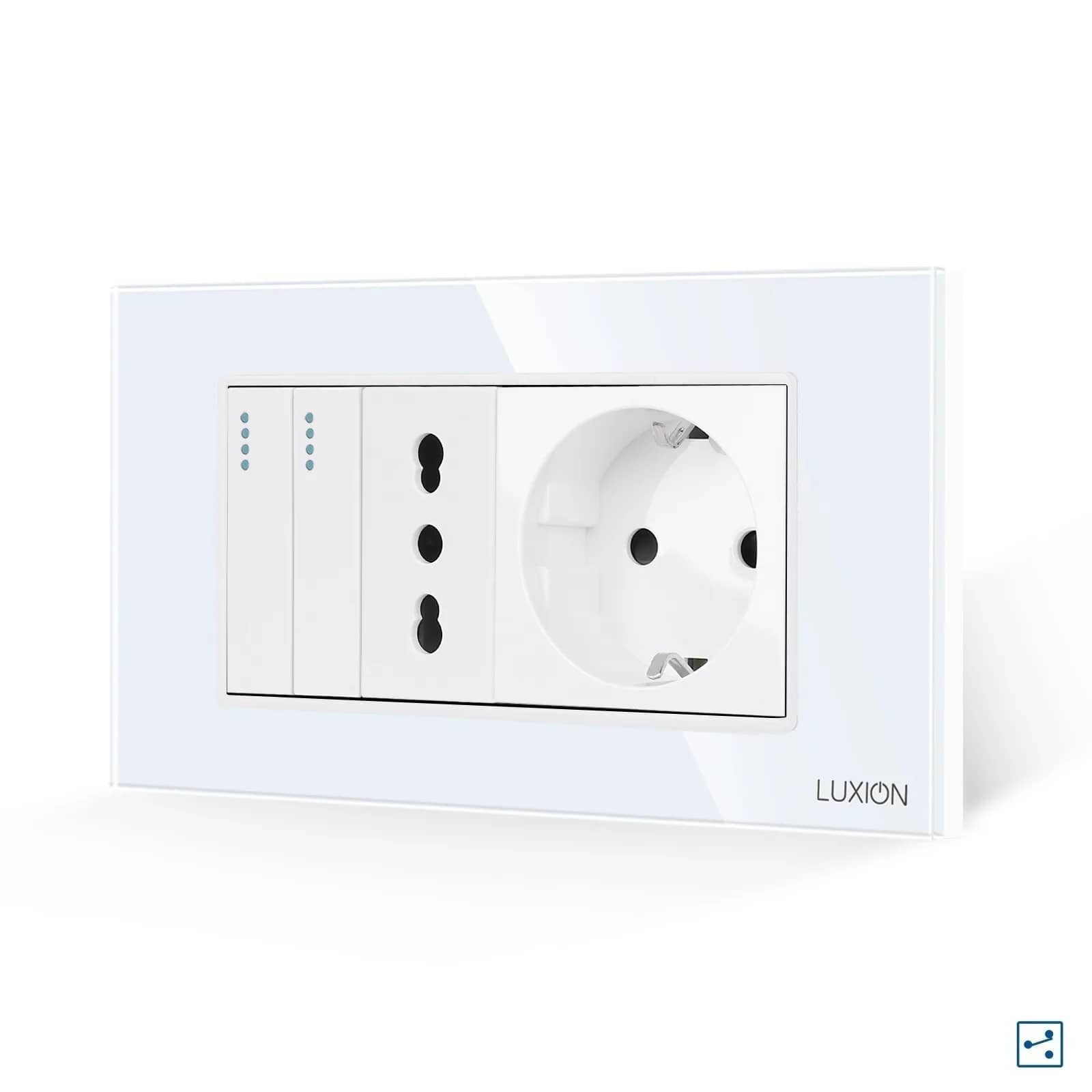
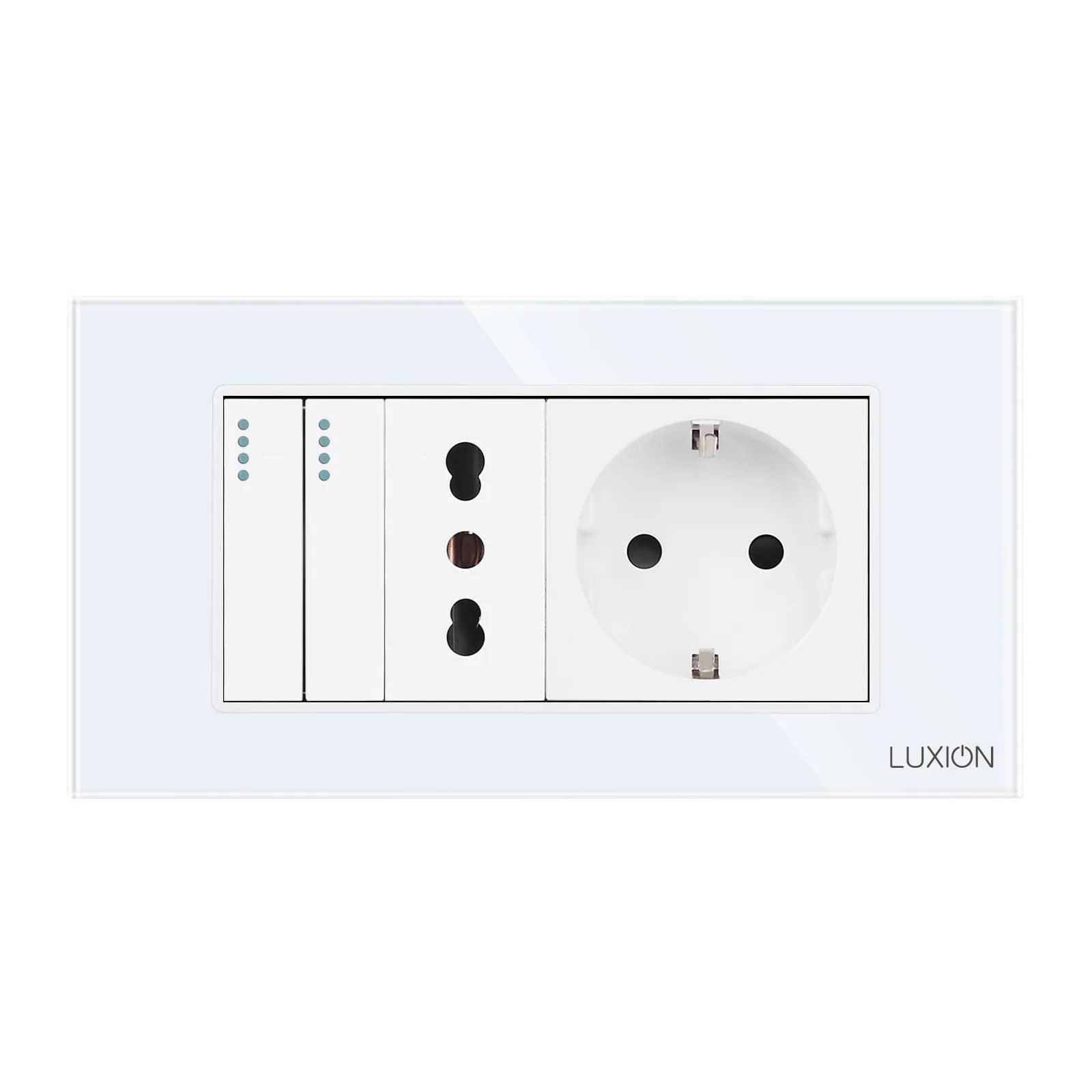
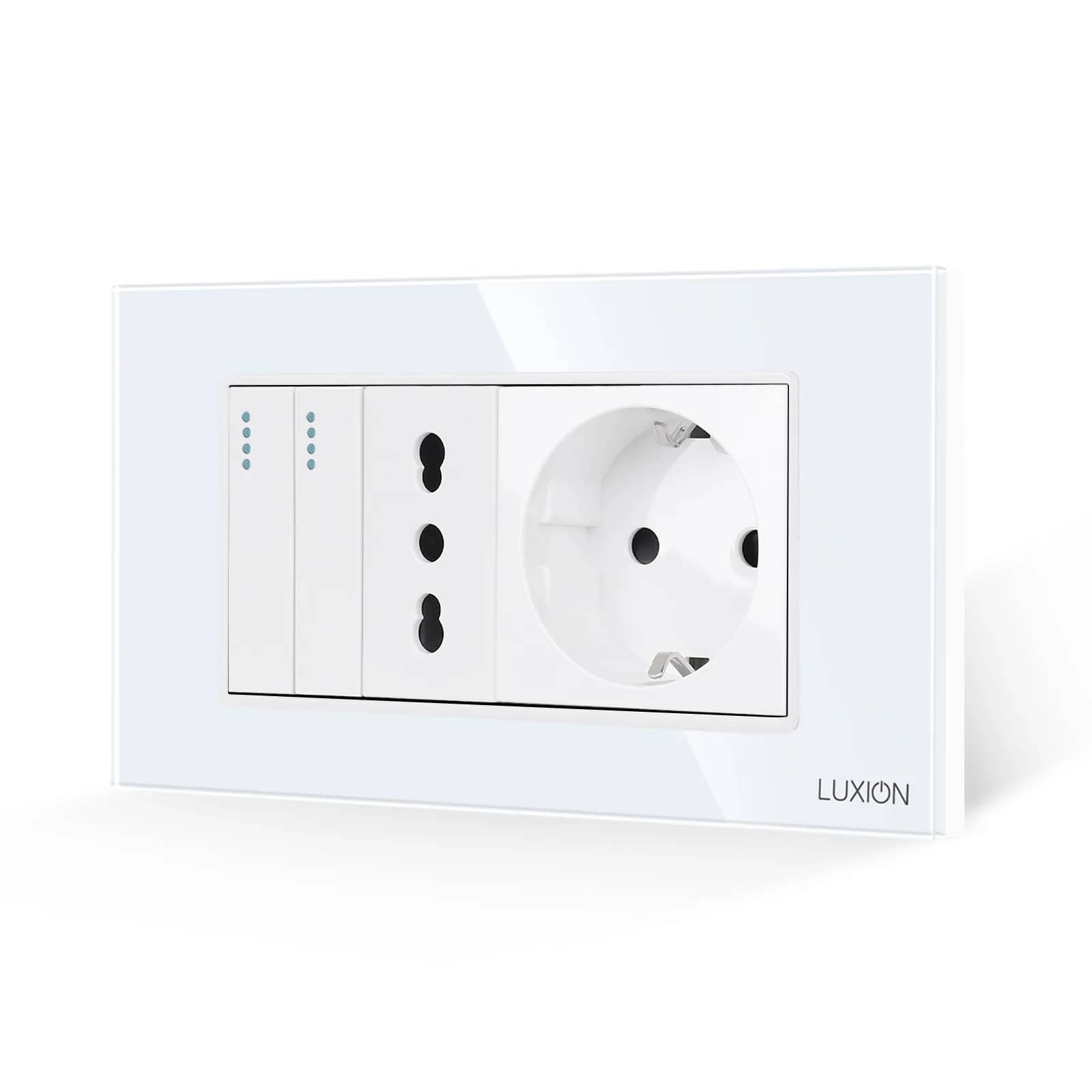
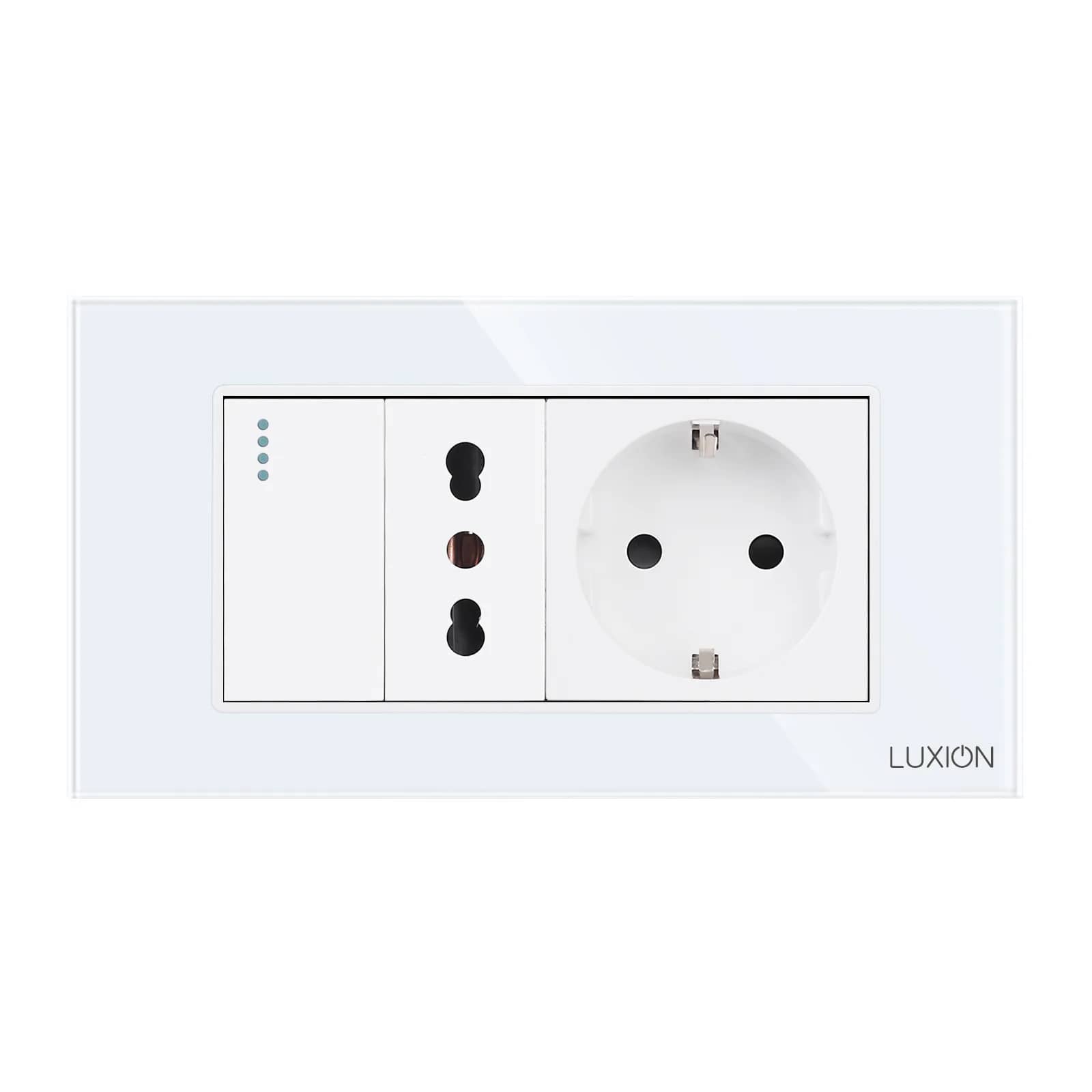
This matters for European products. A European switch designed for a round 60 mm box uses different screw positions, so it may not fix securely to a UK square box. It also matters for sockets. The sockets on our glass panels are European Schuko (Type F) or EU type, not BS 1363. They will not accept standard UAE three-pin plugs without an adaptor. Before choosing a combined switch-and-socket panel, decide whether that suits you and what your local authority and landlord allow.
Plate sizes: 86 x 86 vs 80 x 80 mm
A standard UK single plate is 86 x 86 mm. Many European single plates are slightly smaller, often around 80 x 80 mm. A smaller plate can leave the edge of the box, the plaster cut-out or old paint lines visible. A larger plate usually hides them.
Multi-gang glass panels add another variable: the spacing between boxes. Panels such as the Livolo five-position 2 gang panel or the Luxion 4 x 2 gang panel assume a set centre-to-centre distance between neighbouring boxes. If your boxes are spaced differently, the modules will not line up behind the glass. Check the overall panel size and the module spacing on the spec sheet, then measure the wall.
Fixing centres and screw positions
UK square boxes have two fixing lugs 60.3 mm apart, centre to centre. Round European boxes use different screw positions, and some European modules mount with claws or a metal frame rather than screws. Before buying, find out:
- How the module or frame is fixed: screws, claws or a mounting plate.
- The screw spacing the product expects, and whether its holes are slotted to allow some adjustment.
- Whether the manufacturer offers a mounting adaptor for square boxes. If none is listed, do not assume one exists.
Never force a fit by drilling the box, bending lugs or leaving a module loose. A switch that moves when touched is a safety problem, not just a cosmetic one.
Box depth and the neutral wire
Touch switches contain electronics, so their modules are often deeper than a basic mechanical rocker. Measure the usable depth of your box, from the wall surface to the back, and compare it with the module depth on the spec sheet. Leave room for the cables. A cramped box makes connections hard to inspect and can put strain on the terminals.
Also check the wiring. Some smart and touch switches need a neutral conductor at the switch position, and others can work without one. Our product listings do not always state which applies, so read the spec sheet for your module. Then ask your electrician to confirm whether your switch box has a neutral. In many installations only the live and switched-live wires run to the switch.
Which of our series fit which box
We cannot promise a fit for every UAE wall. The table below shows what each series is designed around, based on our listings, and what you must check yourself.
| Series | Designed for | Check before ordering |
|---|---|---|
| Livolo glass touch panels | Livolo modules only (some listed as wireless/RF) | Plate size, box type and spacing on the spec sheet, plus module depth and neutral requirement |
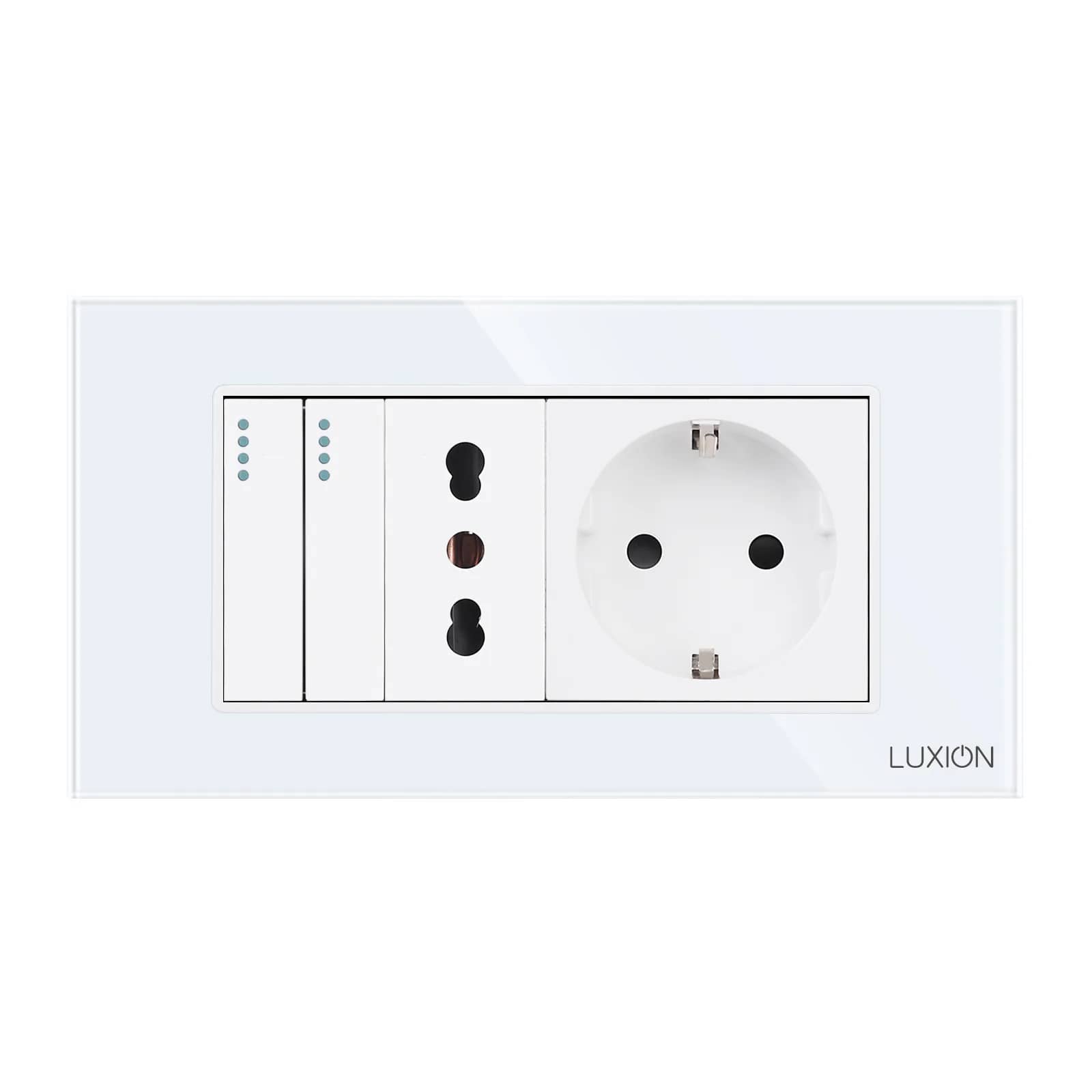
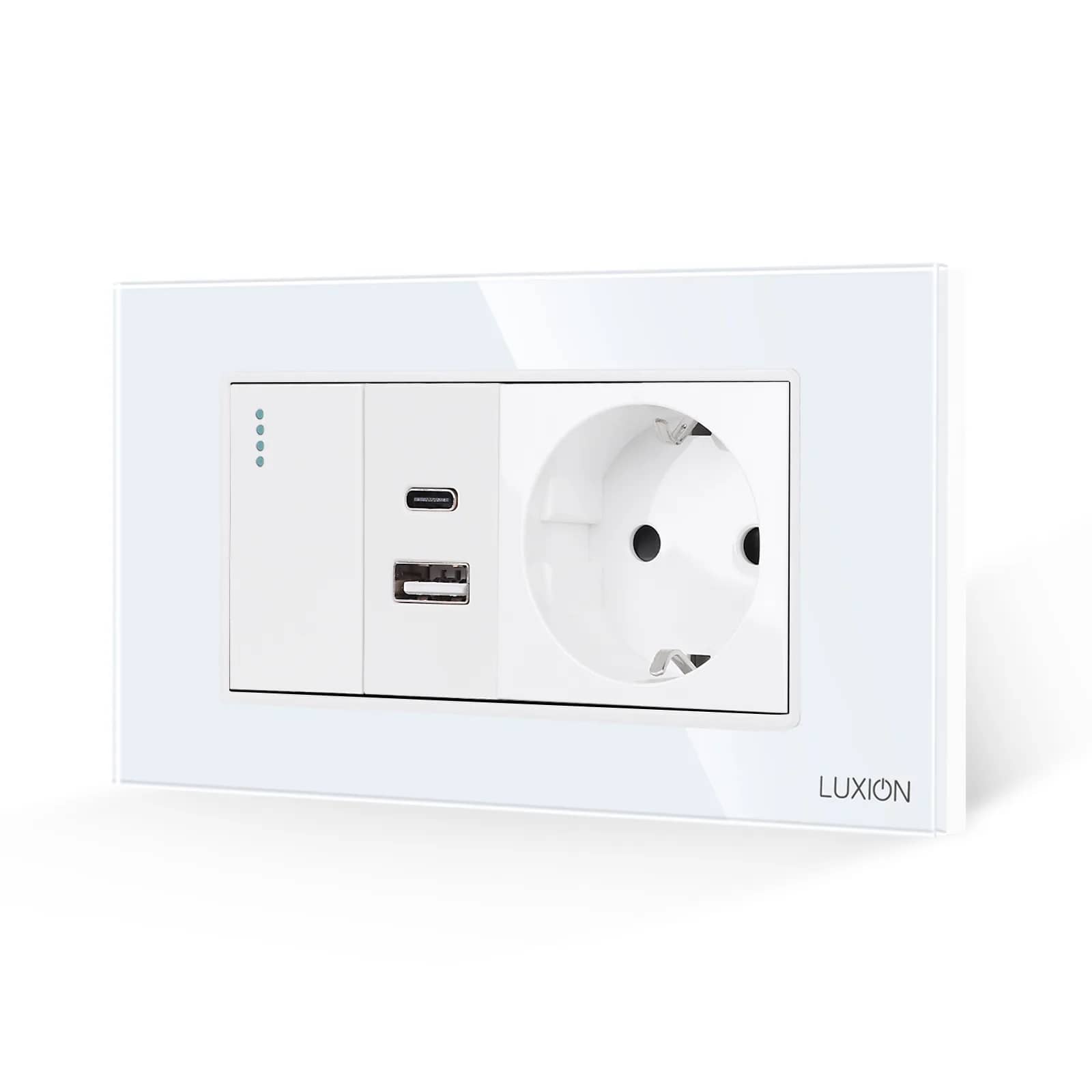
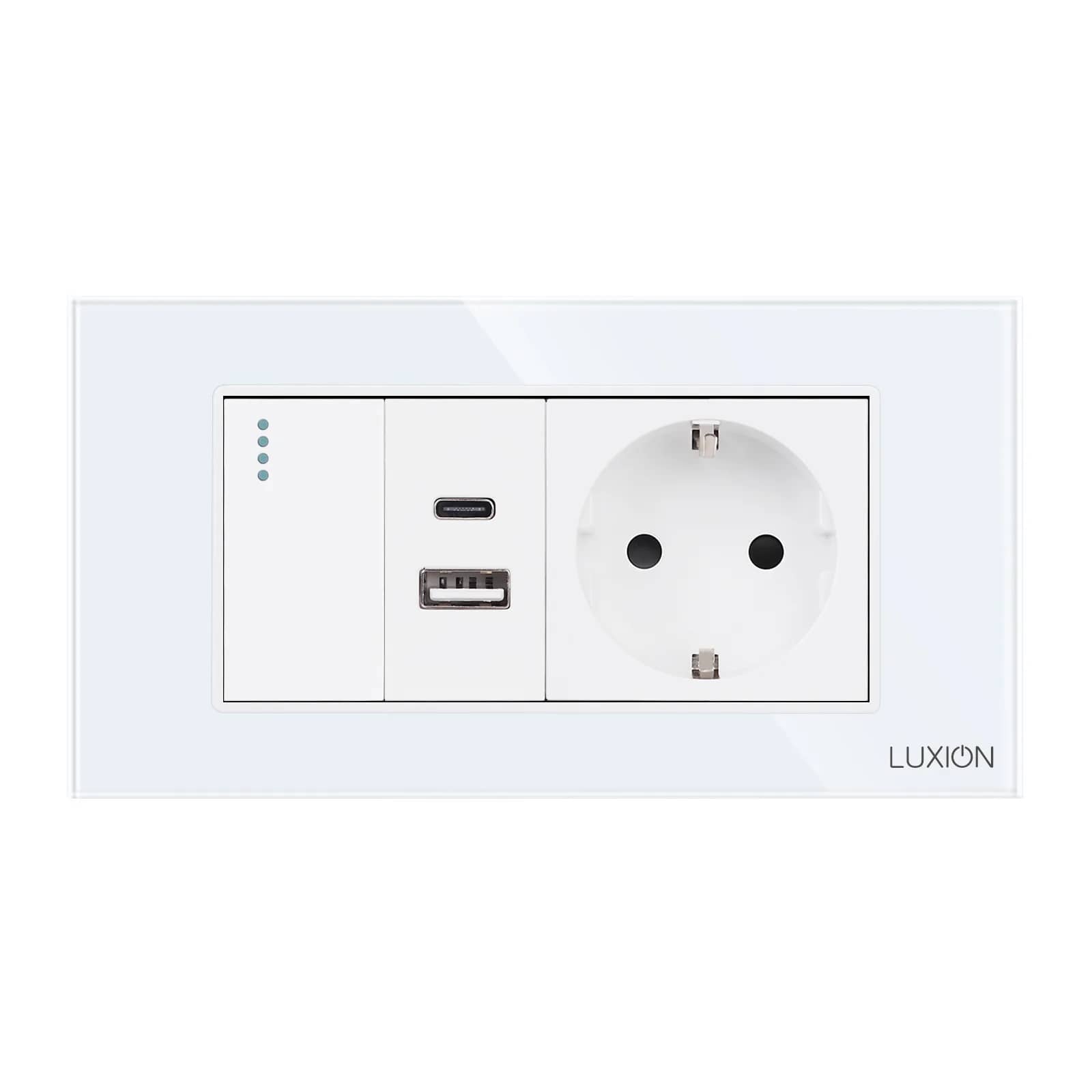
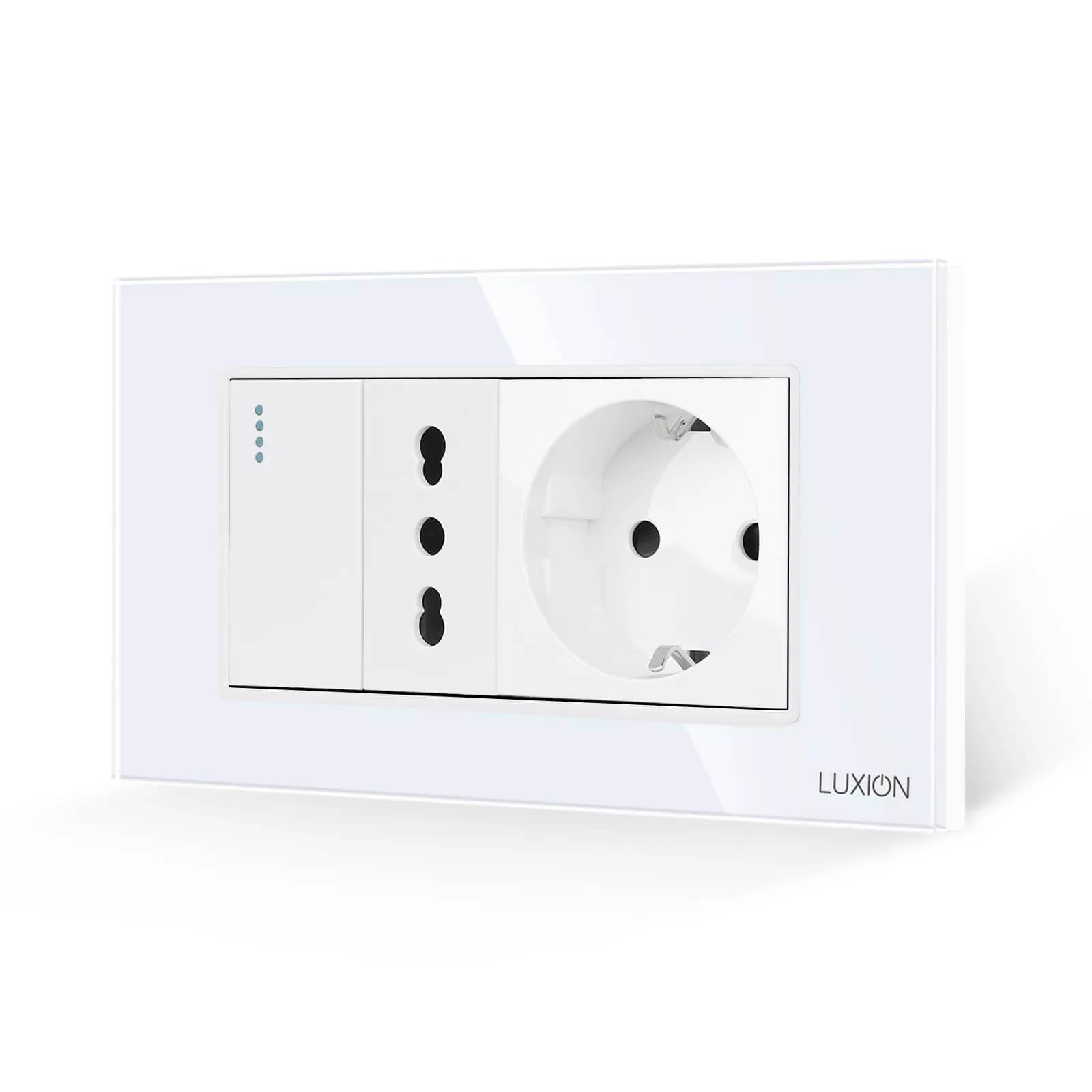
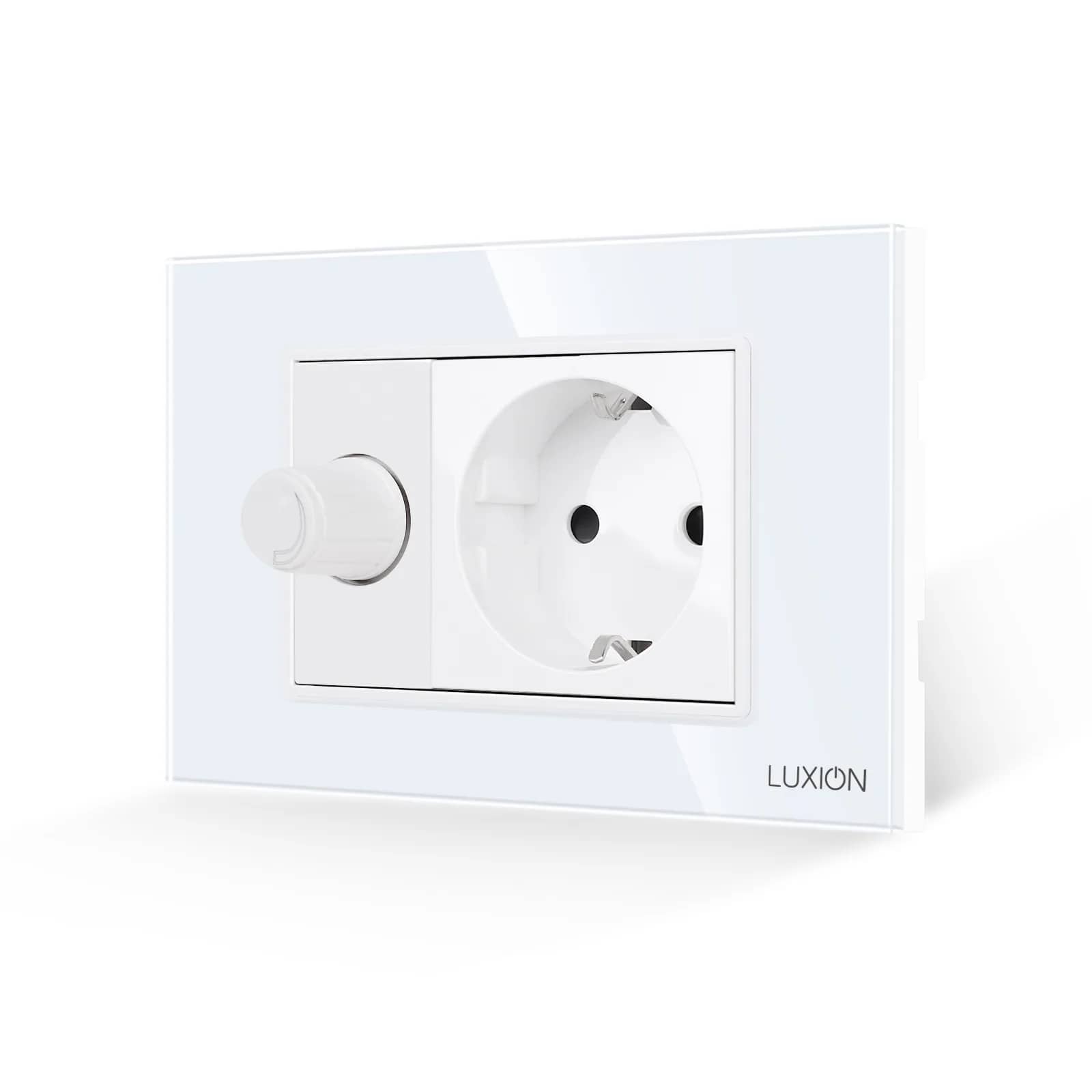
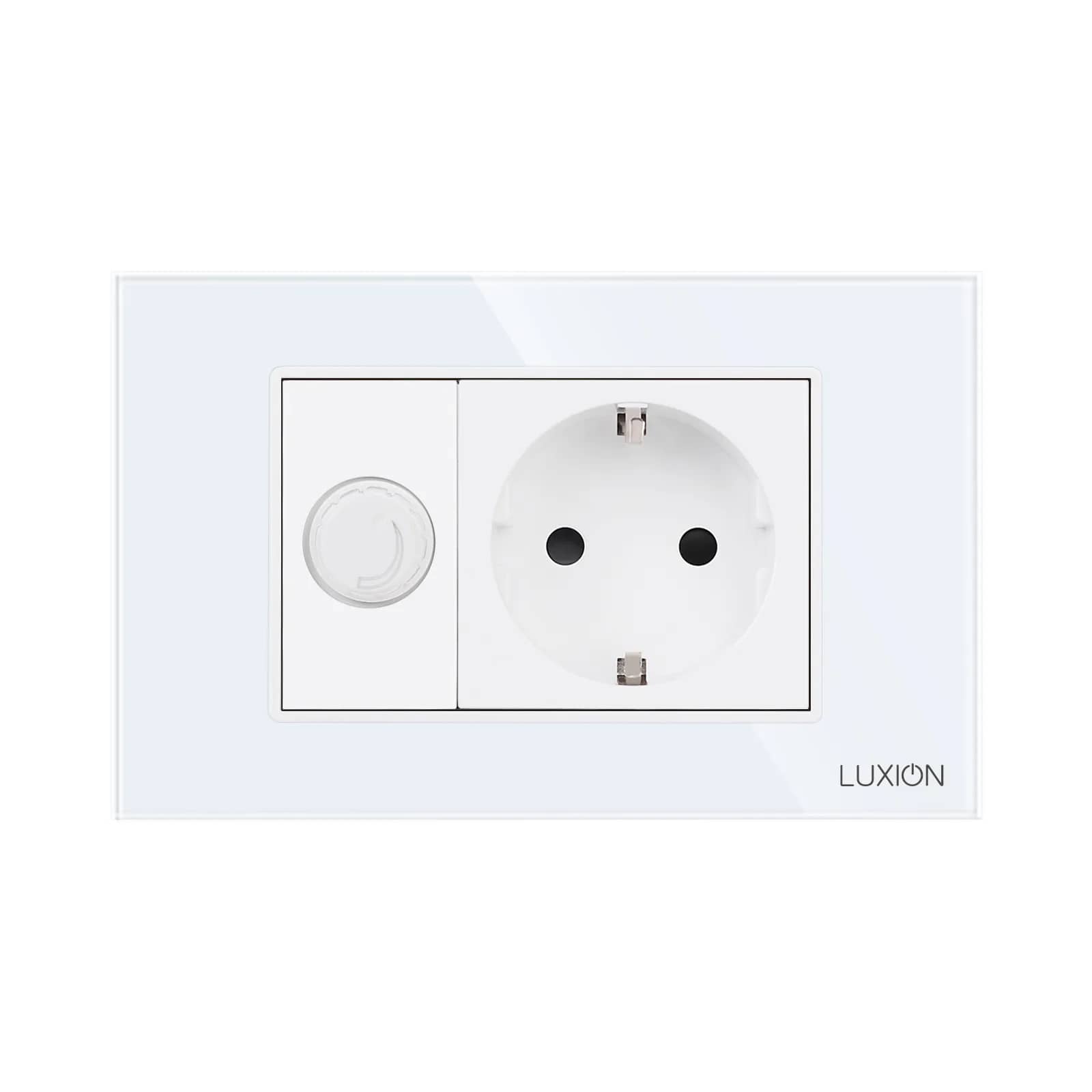
| Luxion glass touch panels | Luxion modules only | Same as above. Combo panels include EU-type sockets |
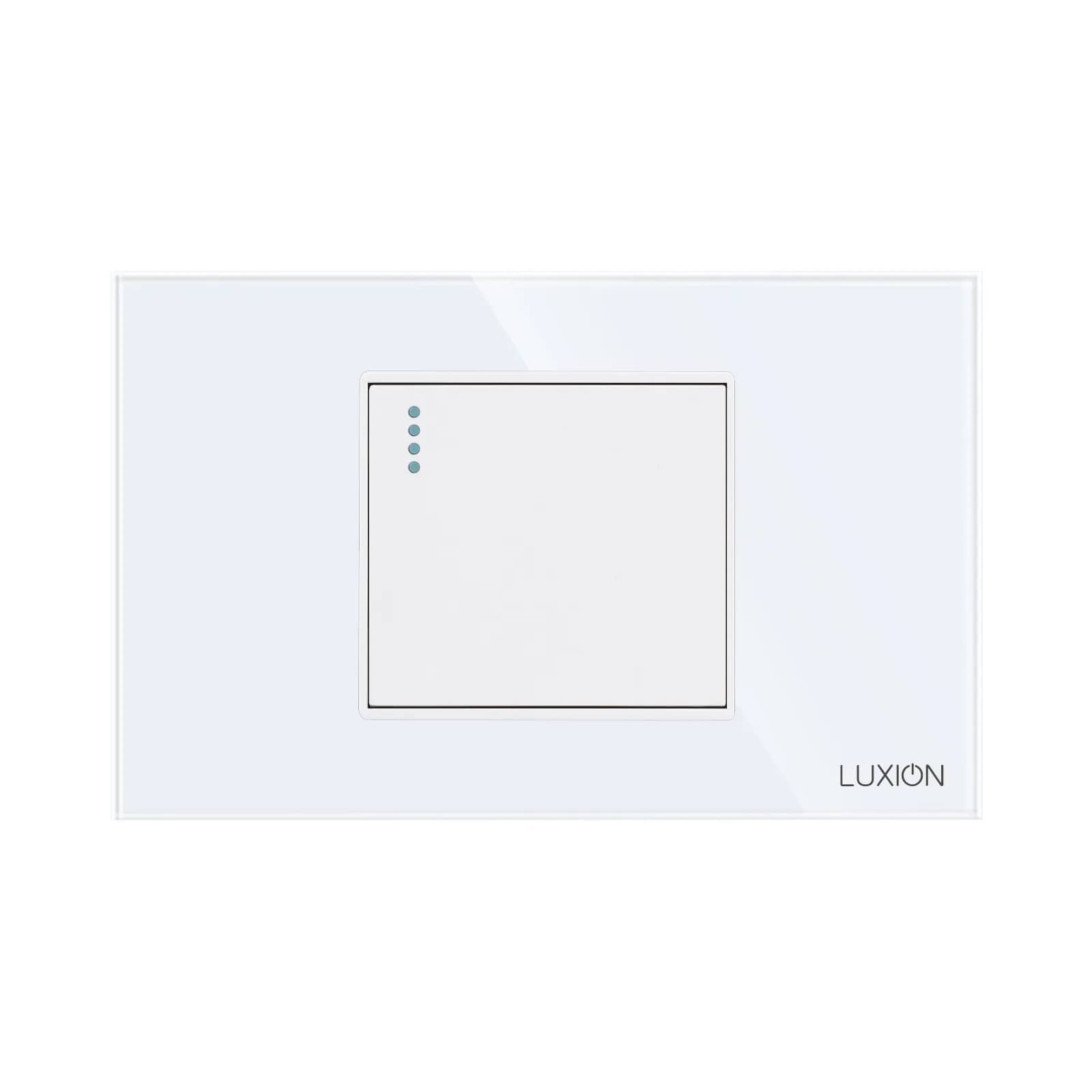
| Luxion mechanical, Italian standard 2M/3M/4M | Italian modular frames (3, 4 or 6 modules) | Whether your box accepts an Italian modular frame. These are not designed for UK square boxes |
| Luxion 4M frames with Schuko | Italian modular box, EU sockets | Schuko socket is not BS 1363, and the frame size must suit your box |
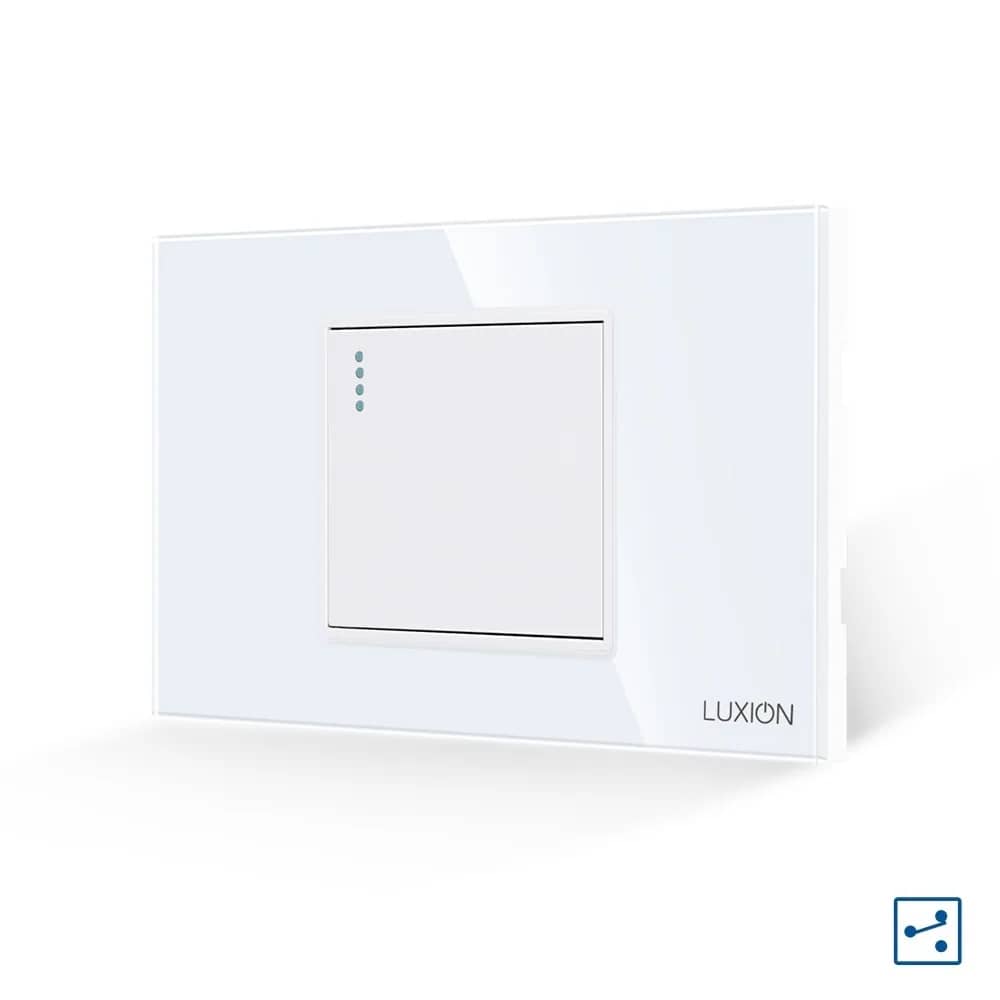
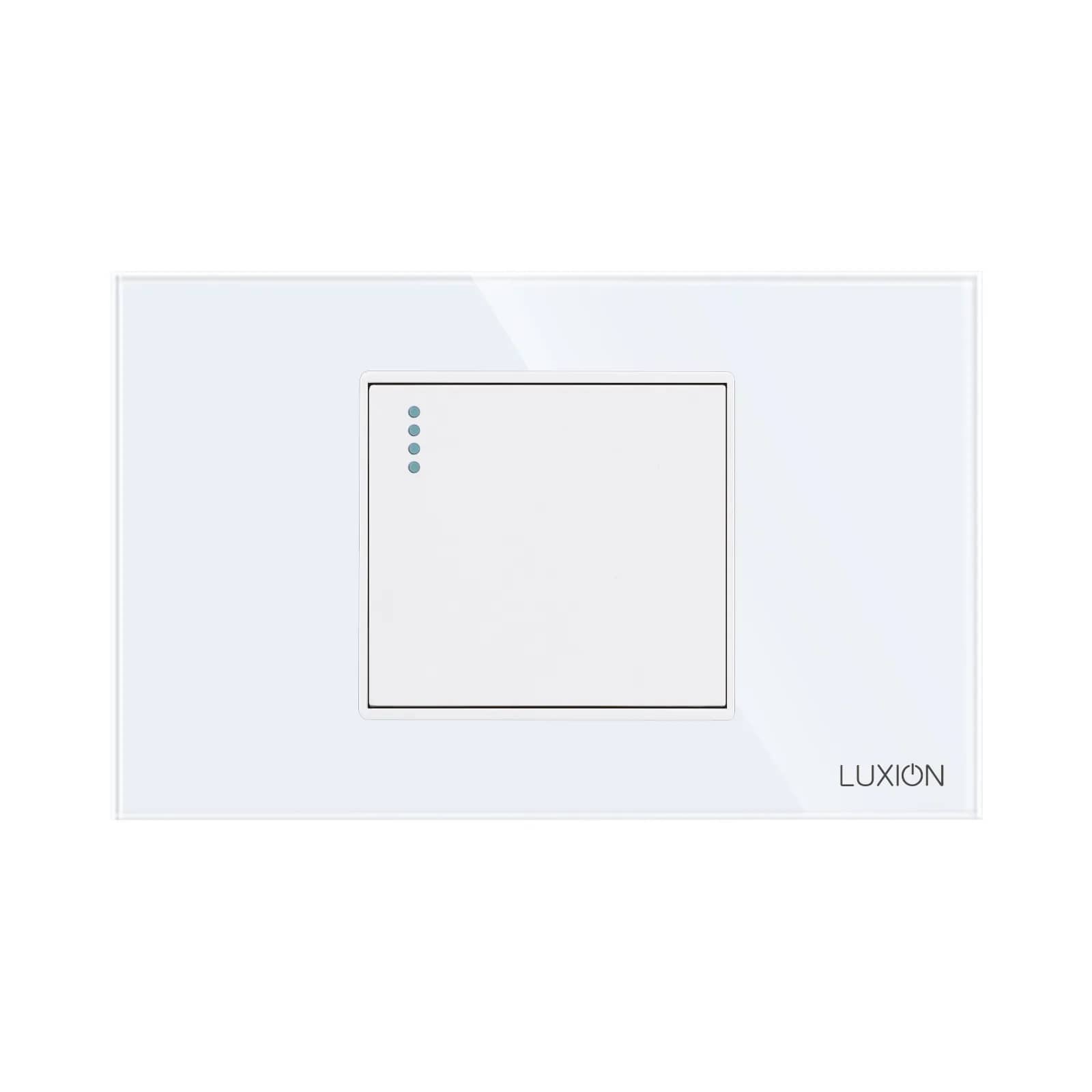
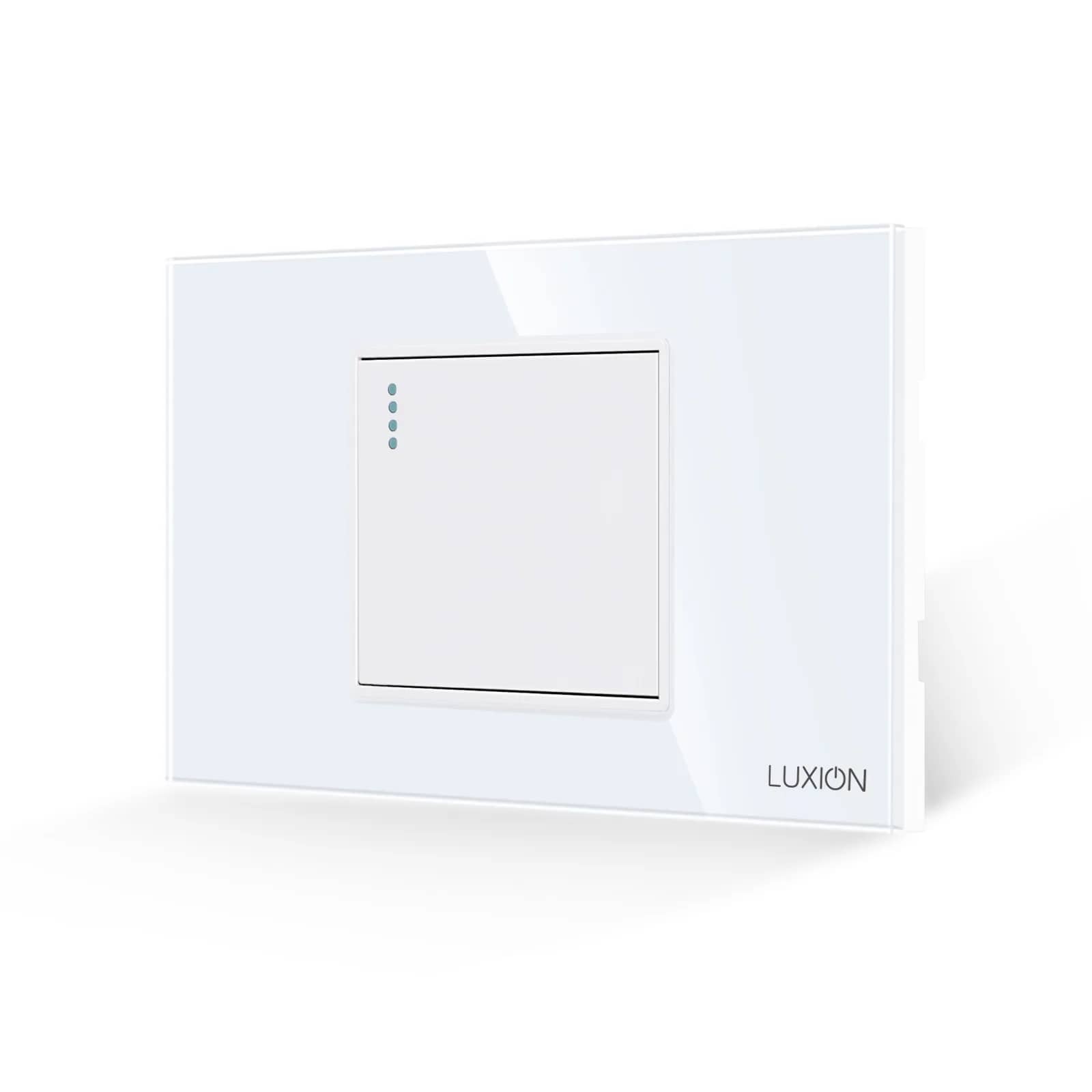
Typical examples include the Livolo socket + 1 gang panel (from AED 38), the Luxion 1 + 2 + 2 gang panel (from AED 36) and, in the Italian modular range, the Luxion mechanical 1 gang switch with glass frame (from AED 34). You can browse the full ranges in Touch Light Switches, Frames & Modules and Switch & Socket Combos.
Remember that panels and modules are matched by brand. Livolo panels work with Livolo modules, and Luxion panels work with Luxion modules. Order the glass and the modules from the same series.
Measure in 3 steps (with photos)
Before you remove any plate, switch off the circuit at the distribution board and confirm it is dead. If you are unsure how to do this safely, leave it to an electrician.
- Box size and shape. Remove the existing plate. Note whether the box is square or round, and measure its opening width and height. Take a straight-on photo with a tape measure in the shot.
- Fixing centres. Measure from the centre of one screw lug to the centre of the other. A UK square box should be about 60.3 mm. For multi-gang layouts, also measure the distance between neighbouring boxes. Photograph both measurements.
- Depth and wires. Measure the depth from the wall surface to the back of the box. Count the wires and note their colours, but do not disconnect anything. Take a close photo. It helps your electrician confirm whether a neutral is present.
Compare your three numbers with the product spec sheet. If they do not match, plan the work with a qualified electrician. Changing back boxes or rewiring is fixed wiring work and must follow your local authority's rules, such as DEWA in Dubai, ADDC/AADC in Abu Dhabi or SEWA in Sharjah. Tenants should also get the landlord's written approval before any alteration, as the standard Ejari tenancy contract restricts changes to the property.
Prices are shown in AED from our current catalogue; tables with totals are examples. The product page always shows the live price.
Frequently asked questions
What back box do most UAE homes use?
Most use UK-style square BS 4662 boxes, which take 86 x 86 mm plates with fixing screws 60.3 mm apart. Older buildings can differ, so check yours.
Will a glass touch switch fit a UAE back box?
Not automatically. Plate size, screw spacing and box depth must all match the spec sheet of the exact series you choose.
Are the sockets on Livolo and Luxion combo panels BS 1363?
No. Our wall sockets are European Schuko (Type F) or EU type, so they do not accept UAE three-pin plugs without an adaptor.
Do touch switches need a neutral wire?
Some do and some do not. Check the module's spec sheet and ask an electrician whether your switch box has a neutral.
Can I mix Livolo panels with Luxion modules?
No. Livolo panels are made for Livolo modules and Luxion panels for Luxion modules. Buy both from the same series.
Who should change a back box or rewire a switch?
A qualified electrician, following your local authority's rules, such as DEWA, ADDC/AADC or SEWA. Tenants also need the landlord's written approval.